

We Are Daystrom
A designer who builds, an engineer who designs.
Origin Story.
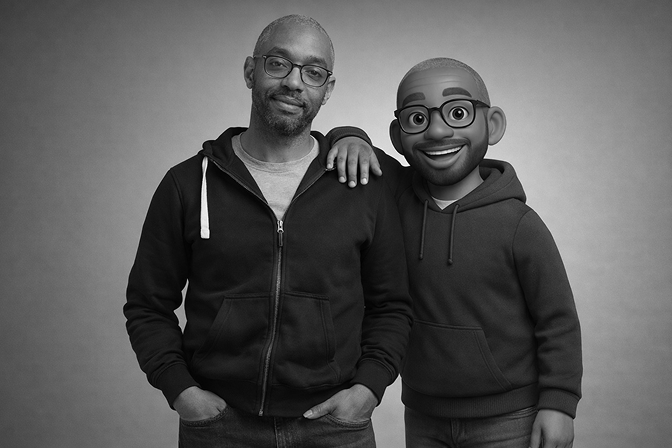
Daystrom is inspired by our inner geek. Dr Richard Daystrom was Star Trek's visionary computer scientist: the man who believed a starship could run itself. The name first belonged to a personal AI project Tim built and ran for years - an assistant that organises, automates and thinks alongside him. When the studio needed a name, it was already taken. By us. Richard Daystrom believed a computer could run a ship. We believe one can help run a studio - with a steady human hand at the helm.
What We Do.
We build iPhone apps and interactive websites that make complicated things simple. Tools that do one job properly, then get out of the way. No bloat, no noise, no learning curve - good software should feel obvious from the first tap.
The studio exists because its founder kept meeting the same problem: the people who build software rarely design it, and the people who design it rarely build it. Here at Daystrom, we do both - which is why the apps here feel engineered and obvious.
The Apps.
Every app here starts the same way: as a problem in Tim's own life. The first tool - a mortgage overpayment planner - exists because he wanted one and couldn't find it. The calculators modelled the wrong behaviour, so he built the tool he wanted to use, with his own mortgage as the first test case.
That's the standard: if it doesn't earn a place on its maker's home screen, it doesn't ship. Everything in the pipeline began as a personal itch, which means every design decision starts from the question a real user asks: does this actually help me?
The Person.
Daystrom Studios is Tim McKnight. Tim has spent his career in and around the web: twenty years as a developer with a switch into UX design in 2018. Designing experiences, championing user testing, and leading cross-functional teams through major projects. Before all that: a first career in sales, a move from Birmingham to Manchester, and a childhood habit of pulling gadgets apart to see how they worked.
That mix is the studio's edge. Engineering depth means knowing what's possible under the hood. UX training means building for the person on the other side of the screen - their advocate, always. Good design should be invisible: it should just work. That's the standard here.
Company of One.
No office, no headcount, no agency overhead. Daystrom Studios is one founder and a crew of AI agents - and that's deliberate. The setup is small by design: a senior designer's judgement, an engineer's depth, and an operations team that never sleeps, without the overhead that usually comes with all three.
Small isn't a compromise; it's the product. Low overhead means the studio stays independent, builds only what it believes in, and can take the time a craft needs. When you use a Daystrom app, you're using software one person is personally accountable for - with all the care, and individuality, that brings.
The AI, and the Human in the Loop.
Here's the honest part: this studio runs on AI. Deliberately, and in the open.
Daystrom - the AI project that gave the studio its name - is now the studio's operations team. Specialised AI agents handle research, first drafts, code scaffolding, and the unglamorous work of builds, tests and checklists. Tim runs that crew the way a senior designer runs a studio floor.
But every decision that matters is made by a person. Design sign-off: human. Code review: human. Quality gates, real-device testing, App Store submissions: human, every time. If an agent produced it, a person approved it - and the name on the door is accountable for all of it.
There's a belief underneath all this: skills are muscles, and muscles you stop using atrophy. AI is a lever here, not a replacement. It speeds up the road; it doesn't choose the destination.
The dark boxes of everyday life - brought into the light.
That's the studio.